
Whoa!
I dove into Solana explorers recently and got hooked fast.
At first it was curiosity about raw transactions and confirmations.
Initially I thought most explorers were interchangeable, but then Solscan showed me transaction graphs, token flows, and specialized NFT metadata views that other tools either hid behind paywalls or simply didn’t surface cleanly.
My instinct said this felt different.
Seriously?
Somethin’ about the UI felt immediate and honestly well organized.
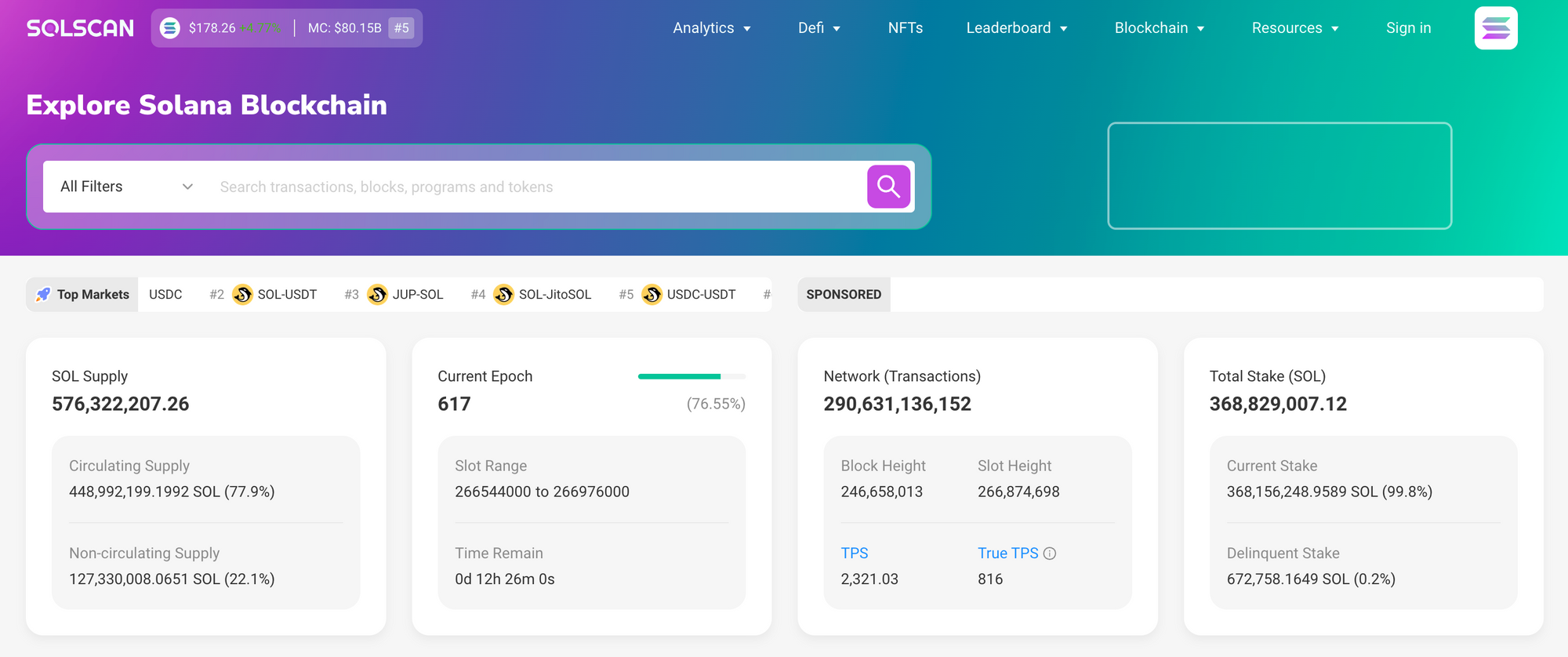
Search by address, signature, or token mint, and you get an instant ledger-style view.
The analytics module lays out holder distribution, transfer patterns, and top interactions in ways that let you answer who moved what, when, and often why, which is a big deal when tracing mints or spotting wash trades.
I’m biased, but this part bugs me in other explorers.
Hmm…
I was following a new NFT drop late one evening.
Transactions looked normal at first glance across several wallets.
By cross-referencing mints, token accounts, and the contract’s approval patterns in Solscan I reconstructed the sequence that revealed an automated drain script and then wrote a short thread to warn others, which felt good but also left me wondering why more people don’t do this routinely.
That night taught me to trust the chain and verify.
Okay, so check this out—
Start with the transaction signature if you have it, paste it into Solscan’s search box, and press enter.
You get fee stamps, confirmations, inner instructions, and token transfers in a single pane.
If you dig deeper, the parsed instruction list shows program IDs and accounts touched, and when combined with program-level docs you can map the high-level action back to specific wallet behavior, which is crucial when auditing unexpected token movements or parsing complex DeFi interactions.
Pro tip: always check the block time against marketplace listings.
Wow!
Solscan’s NFT tab surfaces mint events, metadata URIs, and frozen or mutable statuses.
You can click a mint to see creators, royalties, and token holders at a glance.
That means you can quickly distinguish between a legitimate collection with layered creator shares and a spam mint created by an anonymous wallet that immediately dispersed holdings across throwaway addresses, which matters when you judge a drop’s authenticity or long-term value prospects.
I’m not 100% certain every field is perfect—but it’s close.
Deep dive: practical tips
Really?
If you’re new, bookmark Solscan for quick lookups and keep a saved RPC you trust for state comparisons.
Start with this official explorer — click here — and make it your go-to for transaction forensics.
Initially I thought an explorer was just a search box, but then I used Solscan to cross-check program accounts against source repos and discovered mismatched authorities that explained lingering transfer anomalies, and that process changed how I audit token mints and marketplace listings.
Oh, and by the way, export CSVs when you need bulk analysis.
Whoa!
The holders chart and liquidity pages help you see concentration and rug risks.
Look for sudden spikes in transfers to new wallets or mass approvals granted to unknown programs.
On one hand high sales volume can indicate demand, though actually you should cross-check those transfers with swap program calls and routing to verify they are legitimate market activity rather than circular trades meant to hype a floor price, which is a nuance many miss until it’s too late.
Something else: check for deprecated program IDs and unverified metadata…
Seriously?
Using Solscan changed how I interact with drops and on-chain services.
I’m biased toward tooling that surfaces context quickly because time matters; when a mint window is brief you need clarity in seconds, not minutes.
Initially I thought I’d have to run local scripts for every check, but now I catch most red flags with a few clicks, which saves me headaches and sometimes cash.
There’s still no substitute for careful vetting and community signals.
FAQ
How do I find a transaction by signature?
Paste the signature into Solscan’s main search field and press enter. You will see confirmations, fee information, and the parsed instruction list; if you need more context, click program IDs to inspect linked accounts and recent interactions. Exporting the CSV helps when you want to analyze many transactions together — very very important when doing compliance style reviews.
Can I track NFT provenance with Solscan?
Yes. The NFT view shows mint info, metadata URIs, and current holders, plus creator addresses and royalty splits. My instinct said provenance would be messy, and sometimes it is, but Solscan gives enough breadcrumbs that you can build a credible ownership timeline without spinning up heavy tools — though for forensic depth you might combine it with on-chain metadata fetches and community research.
