
Okay, so check this out—I’ve been in crypto long enough to have seen every shiny gadget claim to be the silver bullet. Wow! Some were useful. Some were downright dangerous. My instinct said “be skeptical”, and I listened. Seriously?
At first glance a smart-card wallet looks almost quaint. Short. It resembles a credit card. But hold up—there’s nuance here, and a lot of practical trade-offs that matter if you actually hold value, not just paper gains. Initially I thought hardware wallets were all about bulkier devices with screens and buttons, but then realized that form factor isn’t the point; usability and survivability are.
Whoa! The thing that got me was the simplicity. Small cards fit in a wallet. You don’t need extra cables. You don’t need to pray the little screen survives a month in your backpack. That matters to regular people. My first impression was: neat toy. Then reality hit—real money management requires resilience, and a thin card survives different failure modes than a phone or a ledger-sized device.
Why a backup card actually makes sense
Here’s the thing. When I think about losses, I see patterns: failed backups, lost seeds, and user error. Something felt off about the way people treat seed phrases like they’re eternal—they’re not. Medium-length wallets with complex recovery flows can be brittle. So you simplify. A backup card reduces human risk by making cold storage as tangible as a bank card. Hmm… sounds obvious, but execution matters.
On one hand a smart-card is less intimidating to newcomers. On the other, you must trust the card’s security model. I’m biased, but I prefer solutions that force you to interact with things physically—it’s slower, and that friction is actually good for security. Actually, wait—let me rephrase that: friction is only good when it replaces accidental loss, not when it creates unnecessary complexity.
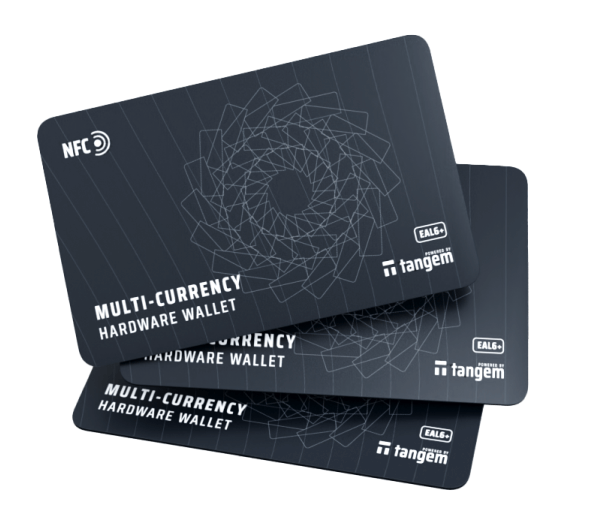
Short story: I tried a few cards. Some had clumsy recovery steps. Some required proprietary apps with questionable UX. Then I found platforms that get it right, combining secure key storage with simple, auditable recovery options. One good example is the tangem wallet—solid card-based keys with practical backup flows that feel like they were built by people who deal with lost keys daily. I’m not saying it’s perfect, but it’s honest engineering.
Threat models and practical security
Okay, quick reality check. Threat modeling is boring, but it’s the backbone of sane custody. Short. You need to ask: who are you defending against? Casual loss? Targeted theft? Nation-state actors? Your answer changes everything. Hmm… my gut reaction often underestimates the simplest attacks—social engineering, scams, phishing—that’s where many people fail.
For everyday holders, protecting the seed from casual loss and scams is high priority. For high-net-worth holders, tamper resistance and hardware auditing matter more. On one hand a card that can’t be extracted from easily is great; though actually, cards that are glue-and-seal secure but impossible to recover if damaged are also problematic. Balance is key.
Longer technical thought: hardware cards often use secure elements that isolate private keys from the host environment, which means even if your phone is compromised, transactions must be signed inside the card’s secure chip—this reduces attack surface significantly, though it places more trust on the hardware vendor’s supply chain and firmware update processes, which themselves need scrutiny and community review.
Real-world usability wins
People forget that the best security is the security you actually use. Short. So designers must meet users halfway. A smart-card fits wallets. It survives laundry cycles better than a phone. It doesn’t depend on batteries. For many users that’s a non-trivial advantage. My instinct said “this will catch on” when I saw family members handle one without panic.
But usability without transparency can be a trap. If recovery relies on a proprietary cloud backup, you lose arbiter-free custody. If recovery is too cryptic, people photograph their seeds and put them on cloud services—no thanks. Good card-based solutions combine clear, auditable recovery with offline-first design. There’s an elegance to an offline backup that still lets you be practical—like carrying a laminated backup card in a safe deposit box.
I’m biased toward simple, repeatable procedures. Double-check them. Practice a dry run. Tell no one where your backups are. These are old rules, forgivable, but very very important.
Backup cards vs. seed phrases
Seed phrases are flexible and well-understood. But they are paper. Paper burns. Paper folds. Paper gets read by curious guests. A backup card built with secure elements can store keys in a form that is both durable and tamper-evident. Short.
On the other hand, storing a single hardware card as the only recovery is risky—loss or destruction is possible. So a hybrid makes sense: multiple cards with distributed backups, or a combination of card + metal seed plate, depending on your threat model. Initially I thought the redundancy overhead would feel cumbersome, but then I realized redundancy is insurance—and insurance is worth its cost.
Long thought: split backups (Shamir-like schemes) can be implemented across multiple cards or media, which increases resilience against single-point failure, but it complicates recovery and raises the bar for the user, so there’s a trade-off between resilience and practicality that must be tuned to the user’s tolerance for complexity and risk.
Where smart-card wallets still need work
Not everything is roses. Short. Firmware update UX is often clunky. Interoperability across wallets varies. There’s also the issue of vendor trust: can you verify the hardware, and has it been audited by independent teams? These are real concerns. I’m not 100% sure every model on the market handles supply chain risk well.
Another practical gripe: many cards are single-protocol out of the box, or they support fewer coins. That bugs me. Users want plurality—the ability to manage varied assets without juggling multiple devices. Some newer card solutions are expanding support, though adoption lags, and developers need incentives to add broader compatibility.
Hmm… also, retailers and banks might someday try to repurpose card-like devices for custodial products that look like non-custodial ones. On one hand that could increase adoption, though actually, it could also confuse users about who truly controls the keys. Education matters here—again, no single feature saves uninformed users.
Practical checklist for choosing a smart-card backup strategy
Short. Here are the basics I use when evaluating an option:
- Does the card isolate keys in a secure element?
- Can I recover without a central service?
- Is the firmware open to audit or audited by reputable teams?
- Does the UX reduce the chance of human error?
- Is the physical durability suitable for my lifestyle?
I’m biased toward solutions that score well on those points. If you want something that feels tangible and low-friction, check a smart-card option like the tangem wallet—they’ve thought through card-based UX and recovery in ways that actually fit real pockets and real lives.
FAQ
Are backup cards safe against physical tampering?
Short answer: many are designed to be tamper-evident and to protect keys inside a secure chip. Longer answer: physical tamper resistance varies by model; always check third-party audits and vendor transparency. Also consider multi-location backups to reduce single-point physical risk.
Can a smart-card replace my cold storage seed phrase?
Probably not entirely. A smart-card can complement or replace certain workflows, but it’s wise to use hybrid approaches (e.g., card + metal seed backup or multiple cards). Your threat model determines the right balance—don’t overcomplicate unless you need to.
What happens if my card is damaged?
Good cards include recovery flows that let you restore keys using a backup card or reserved seed/shares. Test recovery steps before you store large amounts. Practice once, then store your backup securely—dry runs reduce panic when it really matters.
